"

The King Lab develops new microscopy and spectroscopy methodologies and uses our novel approaches to unveil new understanding of the structure and dynamics of interfaces. Our multidisciplinary approach - combining physical chemistry, materials science, condensed matter physics, and biophysics - enables us to address wide-ranging fundamental challenges in interfacial science.

Core Research Areas

Our primary research directions and recent advances

1

Ferroic Domains and Interfaces

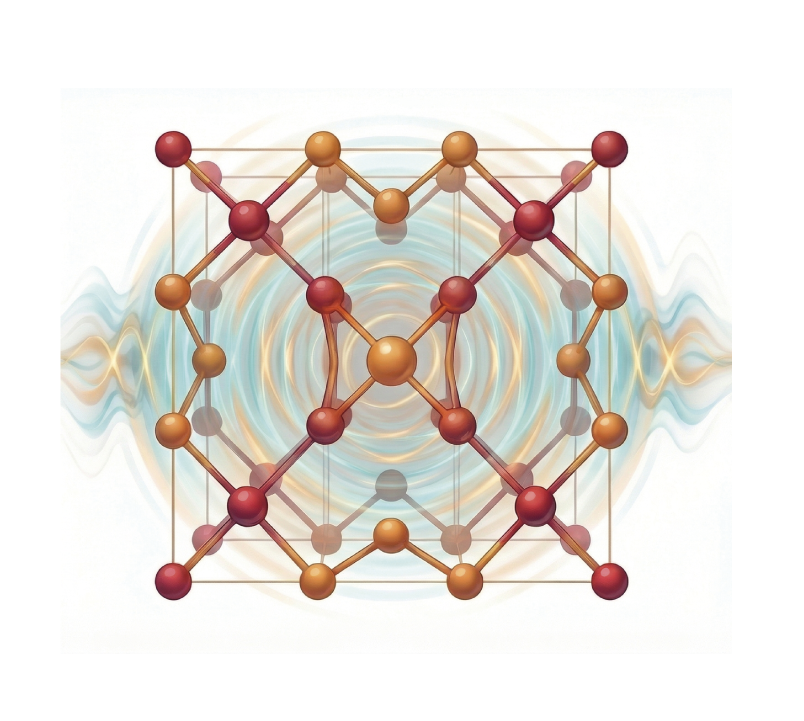
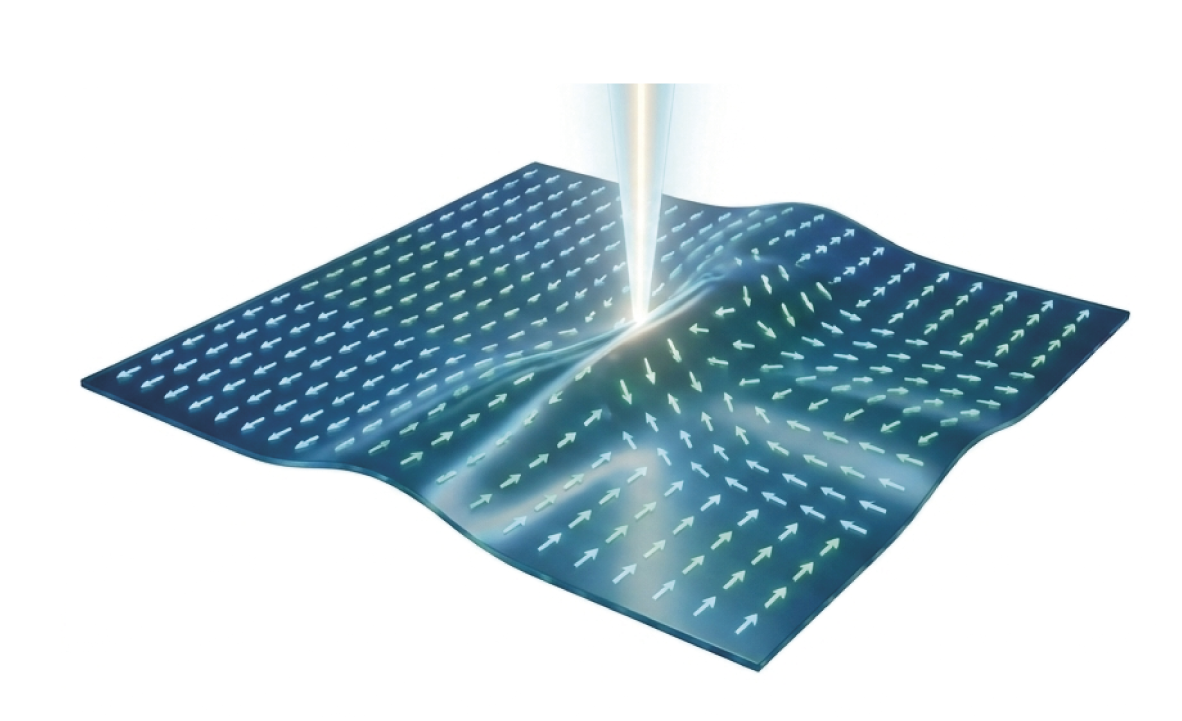
The group has developed new techniques for the nanoscale imaging of ferroic domains in materials that relies upon local structural symmetry for photoemission contrast.

We leverage these capabilities to investigate the role of interfaces and strain in the formation of ferroic domains in materials and robust methods for controlling and tuning ferroic domains and interfaces.

Key Publications:

  • Electronic structure orientation as a map of in-plane antiferroelectricity in β′-In2Se3
    J. L. Spellberg, L. Kodaimati, P. P. Joshi, N. Mirzajani, L. Liang, S. B. King
    Science Advances (2024)
  • Polarization-dependent photoemission electron microscopy for domain imaging of inorganic and molecular materials
    A. Ghosh, J. L. Spellberg, S. B. King
    Journal of Chemical Physics (2024)
Topological Quantum Materials
2

Plasmons and Phonons in Anisotropic Materials

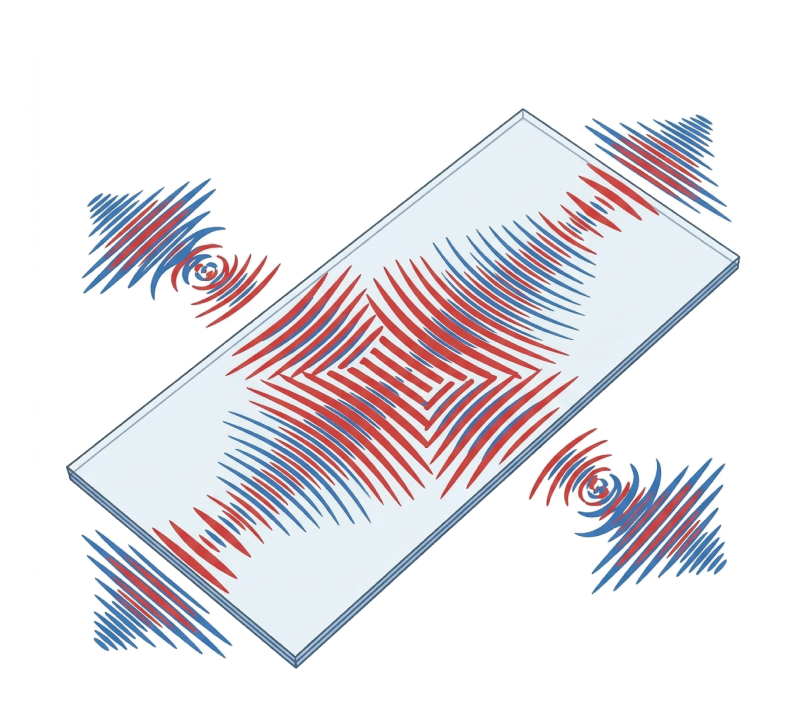
Anisotropic materials create direction-dependent pathways for phonons and electrons, which interact at interfaces to produce emergent phenomena that can be harnessed for next-generation thermal management and optoelectronic applications.

We investigate the phonon and plasmon dynamics of both in- and out-of-plane materials such as MXenes and black phosphorus and the role of interfaces in their properties.

Key Publications:

  • Lattice Anisotropy-Driven Reduction of Phonon Velocities in Black Phosphorus.
    P. P. Joshi, D. Unruh, N. Mirzajani, T. E. Gage, L. Wang, R. Li, H. Liu, L. Liang, I. Arslan, M. K. Y. Chan, S. B. King
    ACS Nano (2025)
  • Imaging and Simulation of Surface Plasmon Polaritions on Layered 2D MXenes
    J. Rieger, A. Ghosh, J. L. Spellberg, C. Raab, A. Mohan, P. P. Joshi, S. B. King
    Science Advances (2025)
Anisotropic
3

Interfacial Dynamics of Charge and Spin

At material interfaces, the intricate dance of charge carriers and spin states drives fundamental physical phenomena spanning quantum transport, magnetic switching, and energy conversion processes.

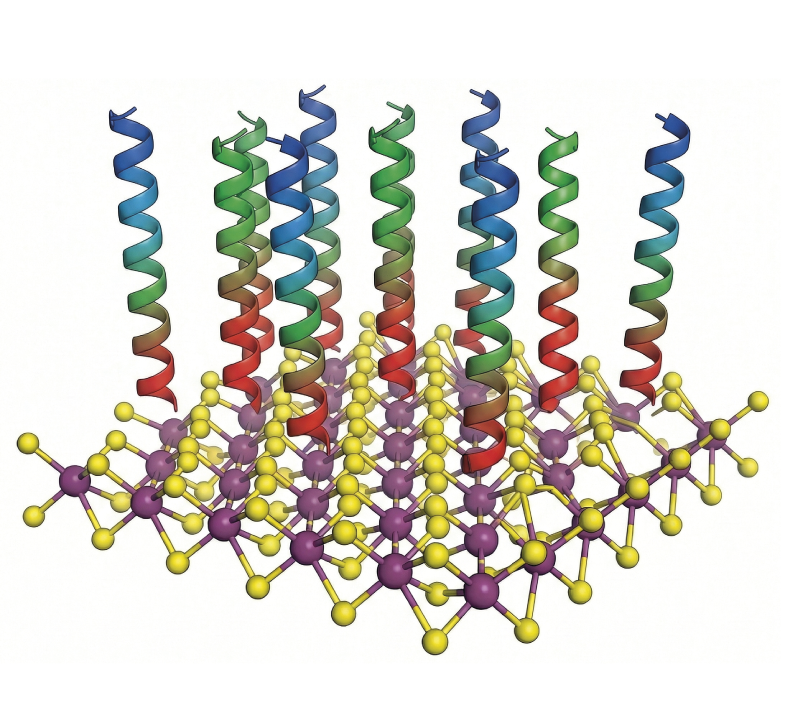
Using intentionally synthesized material interfaces we probe the dynamics of charge and spin transfer using a range of ultrafast optical techniques.

Key Publications:

  • Functionalization of Monolayer MoS2 with Layered Multimolecular Architectures
    A. Arcidiacono, C. R. Johnston, C. L. Keenan, N. Mirzajani, A. Ghosh, A. S. Filatov, S. B. King
    ACS Applied Optical Materials (2024)
  • Ultrafast Spectral Signatures of Laser-Induced Chalcogen Vacancies in MoS2
    C. L. Keenan, A. Arcidiacono, N. Mirzajani, C. R. Johnston, S. B. King
    Journal of Physical Chemistry C (2024)
2D Materials
4

Nanoscale imaging of 3D Biointerfaces

Volume electron microscopy has revolutionized our understanding of biological interfaces by merging sophisticated experimental techniques from chemistry and physics, enabling three-dimensional visualization of cellular structures at nanometer resolution while preserving their native biochemical context.

We have demonstrated that photoemission electron microscopy can map complex biomolecular interactions across membranes and tissue boundaries with unprecedented spatial precision.

Key Publications:

  • OsO2 as the Contrast-Generating Chemical Species of Osmium-Stained Biological Tissues in Electron Microscopy
    R. Li, G. Wildenberg, K. Boergens, Y. Yang, K. Weber, J. Rieger, A. Arcidiacono, R. Klie, N. Kasthuri, S. B. King
    ChemBioChem (2024)
BioImaging

Funding Support

Our research is made possible through the generous support of these agencies and foundations

National Science Foundation
Department of Energy Office of Science
National Institutes of Health
Arnold and Mabel Beckman Foundation
Air Force Office of Scientific Research
Research Corporation for Scientific Advancement
Alfred P. Sloan Foundation

We gratefully acknowledge the support of these funding agencies and foundations, which has been essential to our research progress and scientific discoveries. This support allows us to pursue cutting-edge investigations into interfacial science and develop new techniques for nanoscale imaging.